


Xero gives users real-time insights into cash flow, revenue, expenses, profit and loss, outstanding invoices, and account balances. It connects directly to bank accounts for live transaction updates, generates detailed financial reports, and integrates with tools for inventory, CRM, and time tracking — helping businesses monitor performance, streamline operations, and maintain financial clarity.
If your credentials don't include full access to the data source, make sure your access level meets any permission requirements listed in the Specification section of the integration's page in the Metric Library.
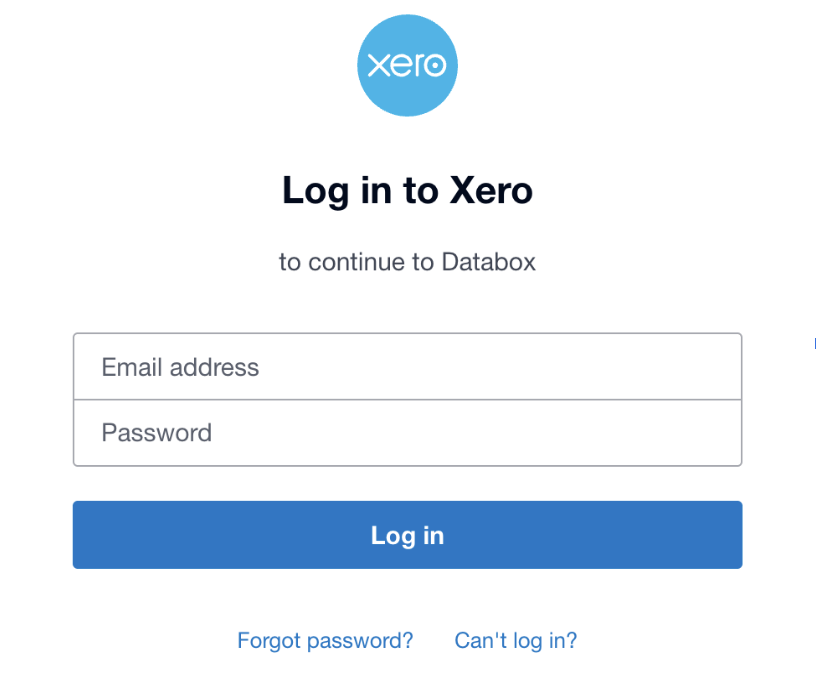
To connect Xero to your Databox account for the first time or with new credentials, log in using your email address and password.
If you've already established a connection, you can reuse it to add new accounts, as long as those accounts are accessible with the existing connection's credentials.
If you manage multiple tenants, you'll be prompted to select the specific tenant you want to connect to Databox. If you have only one tenant, it will be selected automatically.
If your Xero account includes multiple currencies, choose the one you want to report in. If your account uses a single currency, no selection is needed — metrics in Databox will automatically report in that currency.

The Xero integration supports the creation of datasets, which allow you to structure and format your Xero data for more flexible reporting in Databox. By organizing your data into a tabular format, datasets make it easier to filter, segment, and visualize key metrics across projects, clients, and team members.
The entity relationship diagram (ERD) below illustrates how data is organized within the Xero integration, displaying the available views and columns, as well as the relationships between them (primary and foreign keys). This diagram represents the schema, or structure, of the data and helps you understand the underlying data model. With this context, you can create datasets using the relevant views and columns to build custom metrics tailored to your reporting needs.
For comprehensive details on metrics, data availability, templates, specifications, usage guidelines, and other key information, refer to the resources listed below.


FAQ
Why can't I report on multiple currencies at the same time?
Xero's API is built to deliver data in a single currency per request, and apps are encouraged to use the organization's base currency. While certain reports can be generated in another currency, they must be run separately. Since exchange rates are not exposed consistently, combining values across currencies would lead to unreliable totals.


